Automotive suspension technology has evolved rapidly in recent years, and one of the most transformative innovations is active suspension. Unlike traditional passive systems, which rely solely on springs and shock absorbers to respond to road conditions, active suspension uses sensors, electronic control units, and actuators to adjust damping in real time.
As this technology continues to advance, the role of the shock absorber has fundamentally changed. No longer a simple hydraulic damper, it has become an intelligent component that contributes directly to stability, comfort, and safety. In this article, we explore how active suspension systems work, how they redefine shock absorber functionality, and what this means for modern vehicles.
What Is Active Suspension?
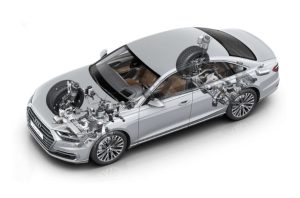
Active suspension is a system that continuously adjusts suspension behavior using electronic controls. It can modify damping force, ride height, and even roll stiffness depending on conditions.
There are three main types:
| Suspension Type | Control Level | Key Features |
|---|---|---|
| Semi-Active | Adjusts damping only | Uses electronically controlled shocks to soften or stiffen ride |
| Active | Full control via actuators | Can lift, lower, and correct body movements in real time |
| Adaptive | Uses preset modes | Eco, Comfort, Sport, etc., with automatic adjustments |
These systems rely on sensors such as accelerometers, wheel-speed sensors, steering-angle sensors, and road-surface scanners.
How Active Suspension Changes Shock Absorber Function
Traditional shock absorbers work passively: they resist motion based on hydraulic fluid and valving. Active suspension transforms them into electronically controlled actuators capable of adjusting damping force instantly.
Key Transformations:
1. From Fixed Valving to Adjustable Damping
Electronic shocks use magnetic valves or solenoids to change fluid flow. This allows:
-
Softer damping on rough roads
-
Firmer damping during cornering
-
Instant response to road imperfections
2. Real-Time Adaptation
Instead of reacting to bumps after they occur, active systems anticipate them using sensors. Some advanced systems even scan the road ahead with cameras.
3. Integration With Driving Modes
Shock absorbers now respond to mode selections:
-
Comfort: soft damping, smoother ride
-
Sport: stiffer damping for better handling
-
Off-road: increased travel and stability
4. Reduced Body Roll and Pitch
Active systems work with anti-roll bars to stabilize the vehicle. This enables:
-
Flatter cornering
-
Reduced nose dive during braking
-
Better traction under acceleration
5. Improved Safety and Handling
Shocks now communicate with ESP/ABS systems, improving:
-
Lane stability
-
Grip on uneven surfaces
-
Emergency maneuver control
Benefits of Active Suspension Shock Absorbers
Enhanced Comfort
Electronic control creates a smoother ride than any passive system.
Superior Handling
Adjustable damping keeps the body stable, improving cornering and braking.
Adaptability
Shocks adapt to load, speed, and driving conditions automatically.
Reduced Wear on Other Components
By controlling body movement, active suspension reduces stress on tires and bushings.
Better Off-Road Performance
Some systems raise ride height or increase articulation for rough terrain.
Comparison: Traditional vs. Active Shock Absorbers
| Feature | Traditional Shocks | Active/Adaptive Shocks |
|---|---|---|
| Damping Control | Fixed or manually adjusted | Automatic, continuous |
| Comfort | Good but limited | Excellent, customizable |
| Handling | Moderate | Superior, dynamic |
| Cost | Low | Higher |
| Complexity | Simple | Electronic + hydraulic systems |
| Safety Integration | Minimal | Works with stability systems |
Where Active Suspension Is Common Today
Active suspension technology is increasingly popular in:
-
Luxury sedans (Mercedes, BMW, Audi)
-
High-performance sports cars
-
Premium SUVs
-
Electric vehicles (Tesla, Lucid, Rivian)
EVs especially benefit from active systems because they compensate for heavy battery weight.
Maintenance and Replacement Considerations
Active shock absorbers are more advanced but also require careful maintenance.
Common symptoms of failing active shocks:
-
Warning lights on the dashboard
-
Harsh or uneven ride
-
Poor leveling or sagging
-
Fluid leaks
-
Excessive bouncing
When replacement becomes necessary, it’s critical to choose high-quality electronic-compatible units. For reliable options, you can buy Shock Absorbers online from trusted suppliers.
Why Active Suspension Is the Future
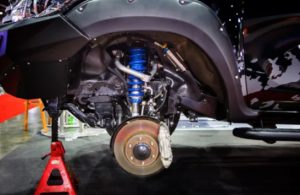
Active suspension represents a leap forward in vehicle dynamics. By combining software intelligence with mechanical precision, these systems provide unmatched:
-
Comfort
-
Stability
-
Safety
-
Performance
As electric and autonomous vehicles become more common, active shock absorbers will play an even greater role. They support heavy EV platforms, enhance ride quality, and ensure predictable handling — key requirements for next-generation mobility.
Conclusion
Active suspension is revolutionizing how shock absorbers function. Instead of merely absorbing bumps, modern electronically controlled shocks actively shape the driving experience. They adapt in milliseconds, improve comfort, enhance safety, and deliver high-performance handling across all road conditions.
As this technology spreads across more vehicle segments, drivers will increasingly rely on smart, responsive shock absorbers that work in harmony with advanced sensors and software systems. And when the time comes to replace these components, choosing high-quality parts ensures long-lasting performance — making it simple to buy Shock Absorbers online and keep your vehicle operating at its best.